




Your kitchen hob is one of the busiest appliances in your home. Every day, it comes into contact with grease, food spills, oil splatters, and burnt residue. If these stains are not cleaned regularly, they can affect the hob's performance, create unpleasant odors, and even reduce its lifespan.
The good news is that keeping your kitchen hob clean doesn't have to be difficult. With the right cleaning method and a few simple tools, you can maintain a spotless cooking surface while protecting your appliance from unnecessary wear.
At Renaisance Kitchen & Home Solutions, we recommend cleaning your kitchen hob after every cooking session once it has cooled. Regular maintenance not only keeps your kitchen hygienic but also helps your hob perform efficiently for years. If you are looking for premium kitchen hobs in Siliguri, choosing a high-quality hob that is easy to maintain can make everyday cooking much more convenient.
Quick Answer
Allow the kitchen hob to cool completely before cleaning. Remove loose food particles, then wipe the surface with warm water and mild dish soap using a soft microfiber cloth. For stubborn stains, use baking soda paste or a manufacturer-approved hob cleaner. Rinse with a damp cloth, dry thoroughly, and polish the surface for a streak-free finish.
Why Regular Kitchen Hob Cleaning Matters
Cleaning your kitchen hob regularly does much more than improve its appearance.
Keeps Your Kitchen Hygienic
Food spills and grease can attract bacteria and create unpleasant smells. Regular cleaning keeps your cooking area fresh and safe for everyday use.
Improves Cooking Performance
Clean burners produce an even flame, while spotless ceramic and induction surfaces transfer heat more efficiently. This helps food cook evenly and reduces energy waste.
Extends the Life of Your Hob
Grease and burnt residue can affect burners, heating zones, and sensors over time. Routine cleaning helps protect these components and reduces unnecessary wear.
Makes Cleaning Easier
Fresh spills are much easier to remove than dried grease. Wiping the hob after cooking prevents stubborn stains from building up.
Know Your Kitchen Hob Before Cleaning
Every kitchen hob requires slightly different care. Using the correct cleaning method helps prevent scratches and keeps the appliance looking new.
Gas Hob
Gas hobs have removable burner caps and pan supports that collect grease and food residue. These parts should be cleaned separately for the best results.
Ceramic Hob
Ceramic hobs have smooth surfaces that are easy to clean but can scratch if cleaned with abrasive pads.
Glass Hob
Glass hobs add a modern look to the kitchen but require gentle cleaning using soft cloths and non-abrasive cleaners.
Induction Hob
Induction hobs also have glass surfaces, but they remain cooler during cooking, making spills easier to clean before they harden.
Choosing a Hob That's Easy to Maintain
If you are planning a kitchen upgrade, choose a hob that suits both your cooking style and cleaning routine. At Renaisance Kitchen & Home Solutions, we offer a wide range of kitchen hobs in Siliguri, including gas, glass, ceramic, and induction models. Our experts can help you select the right appliance for your home.
Cleaning Supplies You'll Need
Before you begin, keep these items ready:
- Soft microfiber cloth
- Soft sponge
- Mild dishwashing liquid
- Warm water
- White vinegar
- Baking soda
- Spray bottle
- Plastic scraper (for glass or ceramic hobs)
- Soft brush or old toothbrush
- Paper towels
Expert Tip: Always check your hob manufacturer's cleaning instructions before using commercial cleaning products. Some glass and ceramic hobs have protective coatings that can be damaged by harsh chemicals.
Step-by-Step Guide to Cleaning a Kitchen Hob
Step 1: Turn Off the Hob
Switch off the hob completely and allow it to cool before cleaning. Cleaning a hot surface can damage the finish and make stains harder to remove. Never pour cold water onto a hot glass or ceramic hob, as sudden temperature changes may cause cracks.
Step 2: Remove Loose Dirt
Use a dry microfiber cloth or paper towel to remove crumbs and loose food particles. This prevents scratches while wiping the surface.
Step 3: Clean the Surface
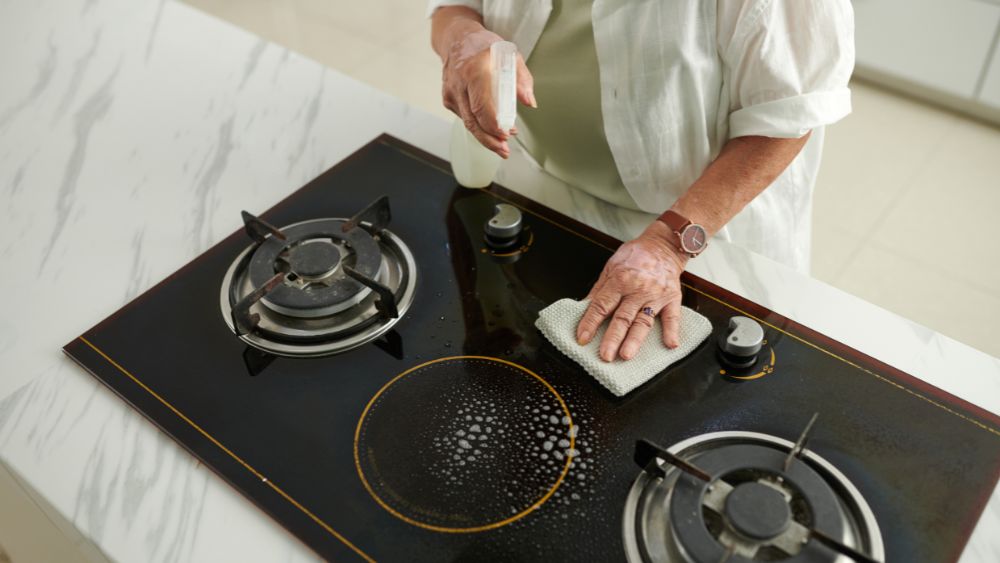
Mix warm water with a few drops of mild dish soap and gently wipe the hob using a soft sponge or microfiber cloth. For daily cleaning, this is usually enough to remove grease, fingerprints, and light stains.
Avoid steel wool, abrasive scrubbers, or harsh cleaning chemicals, as they can permanently damage the surface.
Step 4: Remove Burnt Stains
For stubborn stains, apply a paste made from baking soda and water. Leave it for 10–15 minutes before wiping gently with a damp cloth.
For glass or ceramic hobs, use a plastic scraper held at a low angle to lift burnt residue without scratching the surface.
Step 5: Clean Burners and Detachable Parts
If you have a gas hob, remove the burner caps and pan supports. Soak them in warm water mixed with a few drops of mild dish soap for 15–20 minutes. Then, use a soft brush or an old toothbrush to remove grease and food residue.
Make sure the burner holes remain clear, but never use sharp metal objects to clean them, as they may damage the ports and affect the flame.
Step 6: Rinse and Dry
Wipe the hob with a clean, damp microfiber cloth to remove any soap or cleaning residue. Dry the surface thoroughly with a soft cloth or paper towel to prevent water spots and streaks.
Step 7: Polish the Surface
Finish by buffing the hob with a dry microfiber cloth. This restores the shine and leaves glass, ceramic, and induction hobs looking clean and polished.
How to Remove Stubborn Grease and Burnt Marks
Sometimes everyday cleaning isn't enough. These simple methods can help remove stubborn stains safely.
Baking Soda Paste
Mix baking soda with a little water to form a thick paste. Apply it to burnt areas, leave it for about 15 minutes, then wipe it away gently with a damp cloth.
White Vinegar Solution
Mix equal parts white vinegar and warm water in a spray bottle. Spray the solution on greasy areas, let it sit for a few minutes, and wipe clean. This works well for fingerprints, light grease, and water spots.
Hob Cleaner
For heavy grease or burnt residue, use a cleaner recommended by your hob's manufacturer. Always follow the instructions on the product label to avoid damaging the surface.
Common Kitchen Hob Cleaning Mistakes
Avoid these common mistakes to keep your kitchen hob in excellent condition:
- Cleaning the hob while it is still hot.
- Using steel wool or abrasive scrubbing pads.
- Scraping stains with metal tools.
- Leaving food spills for several days.
- Using excessive water near electrical parts.
- Mixing strong cleaning chemicals such as bleach and ammonia.
- Ignoring clogged burner ports on gas hobs.
Avoiding these mistakes helps protect your appliance and reduces the need for repairs.
How Often Should You Clean Your Kitchen Hob?
Following a simple cleaning routine keeps your hob looking new and working efficiently.
- After every use: Wipe away fresh spills and grease.
- Once a week: Deep clean the surface, burner caps, and pan supports.
- Once a month: Check burner ports, heating zones, and hard-to-reach areas for grease buildup.
Regular cleaning takes only a few minutes and prevents stubborn stains from developing.
When Should You Call a Professional?
Most kitchen hob cleaning can be done at home. However, professional servicing is recommended if:
- Burners do not ignite properly after cleaning.
- Gas flames appear yellow or uneven.
- Electrical controls stop working.
- The glass surface develops cracks or chips.
- You notice unusual smells or poor heating performance.
If your hob is old or no longer performs efficiently, it may also be the right time to consider replacing it.
Also Read:-
How to Install a Kitchen Hob at Home: Step-by-Step Guide
Common Kitchen Chimney Problems & Their Solutions
Looking for Premium Kitchen Hobs in Siliguri?

A good kitchen hob should be easy to clean, energy-efficient, and built to last. At Renaisance Kitchen & Home Solutions, we offer a wide range of kitchen hobs in Siliguri, including gas, glass, ceramic, and induction models from trusted brands.
Our experienced team can help you choose the right hob based on your cooking habits, kitchen design, and budget, ensuring you enjoy both performance and convenience for years to come.
Frequently Asked Questions
1) Is baking soda safe for all kitchen hobs?
Yes. Baking soda is generally safe for gas, glass, ceramic, and induction hobs when used gently. Avoid excessive scrubbing on delicate glass surfaces.
2) Can I use vinegar to clean a glass or induction hob?
Yes. A diluted vinegar solution effectively removes grease, fingerprints, and water spots without damaging the surface when used correctly.
3) Can I use steel wool to remove burnt stains?
No. Steel wool and other abrasive scrubbers can permanently scratch glass, ceramic, and induction hobs. Always use a soft cloth, sponge, or plastic scraper.
Final Words
A clean kitchen hob improves hygiene, enhances cooking performance, and helps your appliance last longer. By following the right cleaning methods and maintaining a regular cleaning routine, you can keep your hob looking spotless and working efficiently every day.
Whether you own a gas, ceramic, glass, or induction hob, using the correct cleaning techniques will protect its finish and ensure reliable performance for years.
If you are planning to upgrade your kitchen or are looking for premium kitchen hobs in Siliguri, visit Renaisance Kitchen & Home Solutions. Our experts will help you choose the perfect hob for your home while providing professional guidance on installation, maintenance, and long-term care.

